
Adobe InDesign Newsletter Design
This article has recently been updated with fresh examples, modern InDesign features and a few new tips from recent training sessions. It now includes updated workflows for Word, Excel, Auto‑Style Packs and data merge.
InDesign Newsletter Design: How modern newsletters come together
Designing a newsletter in Adobe InDesign can feel like a huge step when you’ve been used to software like MS Word or you’ve inherited an InDesign publication that’s been passed round from editor to editor. But once you understand how InDesign handles structure, styles and content in its modern form then the whole process becomes far more intuitive and genuinely enjoyable.
In this article we take a look at how today’s modern newsletters are built, how InDesign has evolved and why knowing just a few key concepts can transform the way you work. If you’re considering training in newsletter design then this post should give a clear sense of what’s possible.
Strong structures make newsletter design easier
Every newsletter begins with a solid document setup. To be fair page size, margins, columns and bleed aren’t the most glamorous InDesign features, but they’re the foundation that keeps your layout stable. Once that’s in place, the real structure happens on Parent Pages the updated name for what used to be Master Pages.
Parent Pages control the repeatable elements that run throughout your newsletter including page numbers, running headers, footers, colour bars, branding and structural grids. When these are built properly, your newsletter feels consistent and professional before you’ve placed a single paragraph. It’s one of the biggest confidence‑boosters for anyone new to InDesign.
A Greta Powell InDesign Tip - setup a newsletter preset
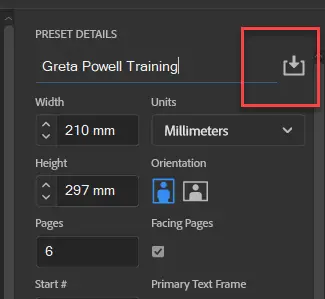
If you produce a regular newsletter, creating your own InDesign presets is one of the simplest ways to keep everything consistent and save time when setting up a new newsletter.
A preset stores your key setup choices page size, margins, columns, bleed, export settings and even colour profiles so every new issue starts with the correct structure. Instead of rebuilding your layout from scratch or relying on memory, you open a preset and begin designing immediately.
It keeps branding tight, reduces errors and gives you a reliable foundation for every edition.
Modern styles when traditional text control meets AI assistance
Typography is one of my absolute passions and its where newsletters really come alive with InDesign’s style system one of the most powerful ways to keep everything consistent. Traditional Paragraph and Character Styles remain the backbone look of any document and honestly, they still offer the most flexibility and control.
But modern InDesign also includes Auto‑Style Packs, which use AI to analyse unformatted text and apply your chosen styles automatically. If you’re dealing with long articles or large amounts of copy, this can save hours of manual formatting. Even if you prefer the traditional approach (and many designers still do), it’s useful to know how these newer tools can speed up repetitive tasks.
The combination of traditional styles and AI‑assisted formatting gives you the best of both worlds: precision where you want it, automation where it helps.
Word, Excel and the reality of newsletter design
Most newsletters begin life in Microsoft Office, so smooth integration matters. InDesign handles Word documents beautifully when you place them rather than paste them, and it can even map existing Word styles into your InDesign style sheets. This alone can tidy up a messy workflow.
Excel is just as important. Many newsletters include charts, tables or quarterly data, and InDesign’s live Excel links make this effortless. You can place a chart with a dynamic connection to the original Excel file, and when the data changes, InDesign updates the chart with a single click. No rebuilding, no reformatting, no layout disasters.
These workflows are often the turning point for editors who’ve been wrestling with Word layouts for years.
Images, image flow and visual rhythm
InDesign provides precise controls for image placement, framing, and text wrapping to establish visual consistency and layout rhythm. Additionally, the software supports efficient exporting for both print and digital distribution, including web-friendly options like Publish Online.
Images bring newsletters to life, but they can also cause chaos if they’re not handled properly. InDesign gives you precise control over how images sit within your layout, how text wraps around them, and how spacing behaves from page to page. Once you understand how frames, fitting and offsets work together, your layouts start to feel calm and intentional rather than unpredictable.
This is where newsletters begin to look “designed” rather than “assembled”.
Print, Digital and everything in between
Newsletters aren’t just printed anymore. Many organisations now produce both print and digital versions, and InDesign makes it easy to export clean, professional PDFs for either purpose. For digital-first publications, Publish Online offers a simple way to create a web-friendly version without building a separate layout.
It’s a small feature with big impact for membership organisations, charities and internal comms teams who want both print and digital distribution.
A real newsletter training example
Because the journal required physical mailing we included a data merge workflow in the course. This started at the beginng by creating an Excel datasheet of contacts which was converted to tab-delimited text for personal names, addresses, and postcodes for each printed copy. It was then imported into the newsletter using InDesign’s powerful datamerge feature.
How do you track reader engagement on a printed and posted newsletter?
For printed and posted publications, InDesign’s ability to automatically generate unique QR codes during a Data Merge is an absolute game-changer. By simply prefixing a column header with a hash symbol (#) in your data source spreadsheet InDesign can then interpret those column cells as scannable vector graphics rather than plain text.
Why would you even bother using QR codes in an InDesign merge?
It is brilliant for a few big reasons:
- Frictionless Renewals: When a member scans the code on their physical newsletter, it can instantly log them securely into their personal online account on their phone. No typing out long web addresses, and zero forgetting clunky passwords they are right there on their dashboard ready to renew their subscription.
- Instant Event Booking: If you are promoting an upcoming AGM, a special members’ evening, or a training session, scanning the code can open a registration page that automatically pre-fills their name, email, and member ID. It makes signing up completely effortless.
- Proving the Value of Print: Print is a beautiful, tactile experience that members love, but it’s historically been impossible to track. By using unique codes, your website analytics can show you exactly how many members interacted with the physical mailer, proving that your print budget is well spent.
For a distributed newsletter, this means you can instantly merge hyper-personalised web links, custom email triggers, or digital business cards (vCards) unique to every single recipient on your mailing list. It bridges the gap between physical print and digital tracking flawlessly, letting you see exactly who interacts with your newsletter the second they scan the page
🍷 – Cheers and good luck with the human side to this. I haven’t, although I keep at it, worked out how to share tea and biscuits on online InDesign sessions and also haven’t worked out how to get people to scan QR codes. Its all about ‘in a perfect world’ stuff.
If you'd like to learn newsletter design properly
If you’ve never built a newsletter in InDesign before, the setup stage is surprisingly straightforward and getting it right makes everything else fall into place. Most newsletters begin with an A4 or A5 document, but the real structure comes from your margins and columns. A two‑ or three‑column layout gives you the flexibility to run articles, sidebars, member stories and images without fighting the page. Once your margins and columns are set, adding a small bleed ensures your colour bars and images print cleanly to the edge.
From there, Parent Pages do the heavy lifting. You can add your page numbers, running headers, footers and branding once, and InDesign applies them across the entire publication. It’s one of the simplest ways to make a newsletter feel instantly professional.
Typography is where newsletters really come together. Traditional Paragraph and Character Styles still offer the most control — especially when you’re working with branded publications that need precise spacing, hierarchy and tone. But modern InDesign also includes Auto‑Style Packs, which use AI to analyse unformatted text and apply your chosen styles automatically. If you’re dealing with long articles or raw copy from Word, this can save hours of manual formatting. Many designers still prefer the traditional approach, but knowing how to combine both gives you a flexible, modern workflow.
When you’re ready to export, choosing Adobe PDF (Print) gives you access to bleed, print marks and high‑quality output. For digital versions, Adobe PDF (Interactive) keeps your hyperlinks live and produces a clean, screen‑friendly file. If you want a web‑based version, Publish Online creates a responsive digital newsletter directly from InDesign, and the Publish Online Dashboard lets you update, replace, unpublish or track views without touching your layout again.
These are only small glimpses into the workflow, but even these tiny steps can make a huge difference
A Greta Powell InDesign Tip
Here’s a quick classic‑meets‑modern tip. Years ago and I am talking years ago one of the best tricks for preserving formatting from Word was adjusting Clipboard Handling so pasted text retained its structure. It’s still useful especially for editors who live in Word but InDesign now goes a step further. With Auto‑Style Packs, you can drop in completely unformatted text and let InDesign map out headings, subheads and body text automatically. It’s a small example of how the software has evolved, but it makes a noticeable difference in newsletter production.
Classic v Modern, place, clipboard handling and auto-styles
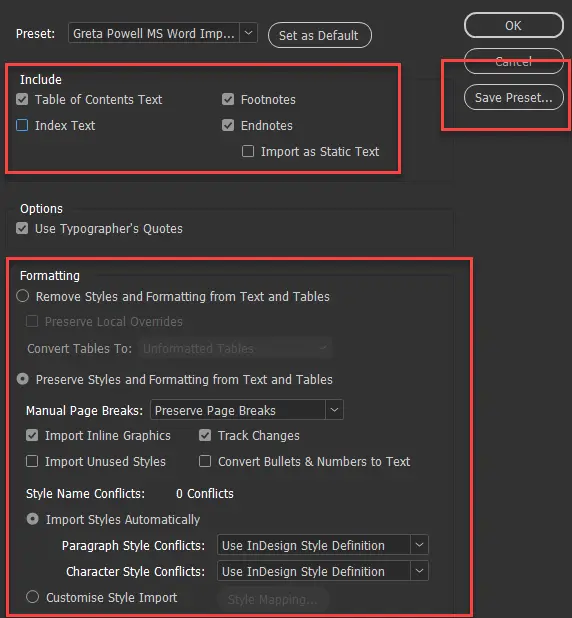
For years, one of the most reliable ways to bring Word content into InDesign was simply to use the Place command. It’s still the best method today. When you place a Word file, InDesign can recognise and map existing Word styles directly into your InDesign style sheets, giving you a clean, structured import.
Alongside that, there’s the older Clipboard Handling trick. If you prefer to copy‑and‑paste text from Word, switching your preferences from Text Only to All Information tells InDesign to preserve formatting, structure and styling when you paste. It was once considered a bit of a secret weapon for editors who lived in Word all day.
Modern InDesign adds a third option: Auto‑Style Packs. Instead of relying on pasted formatting, InDesign can now analyse completely raw text and apply your chosen styles automatically using AI. It’s not a replacement for traditional branded styles — those still offer the most control but it’s a helpful shortcut when you’re dealing with long articles or unformatted copy.
Greta Powell recommends - when bringing Word files into InDesign
Behind the scenes - smarter workflows for busy teams
- Data Merge (The Administrative Powerhouse): Think of this as the ultimate time-saver for repetitive, data-heavy documents. I frequently build customised sprints around this for my clients in corporate HR, hospitality, and exhibition design. Instead of spending days manually copying and pasting hundreds of rows of information, we link an Excel spreadsheet directly to your layout. InDesign then automatically generates personalised delegate badges, certificates, or ticketing sheets in seconds even pulling in variable logos and headshots on the fly.
- Publish Online (Frictionless Digital Sharing): Once your newsletter or brochure looks exactly the way you want it, you don’t need a web developer to get it online. With a single click, InDesign lets you publish a fully interactive digital document straight to a secure Adobe link. Your readers get a beautiful, responsive,“seamless horizontal layout transition” experience complete with clickable buttons, hyperlinks, and embedded videos while your team avoids the cost and headache of managing external digital publishing platforms.
We'd love to hear from you
If you’d like to book an InDesign newsletter course, check dates or arrange a pre‑course meeting, you’re very welcome to get in touch. Training is available for individuals, teams, charities and not‑for‑profits, with flexible scheduling across short sprints, half‑days and full‑day sessions.
You can book or enquire using any of the options below:
⟶ Chat on WhatsApp [Click to Chat]
Response time: Usually within 15 minutes.
⟶ Email us:
Send us your team size and location for a quote within 1 business day.
⟶ Call Direct: +44 (0) 7889 761 241
Call us to discuss
